
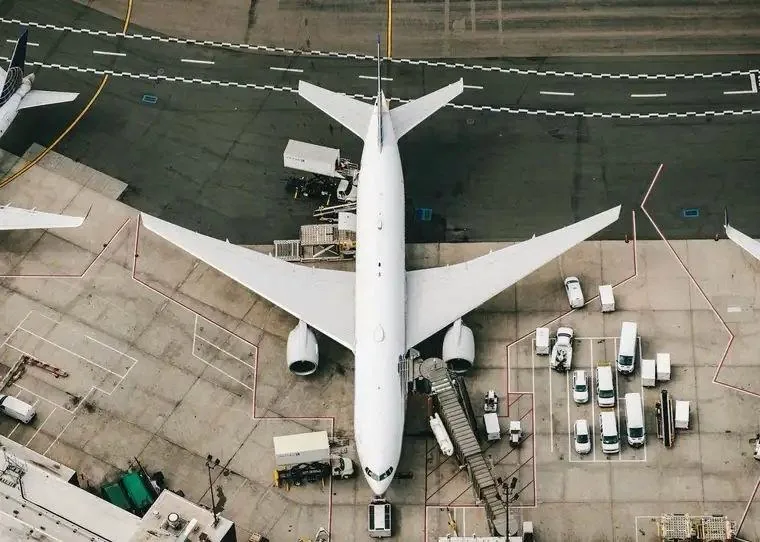
For thirty years, dismantling an end-of-life aircraft revolved around a single material: aluminium. A typical airframe from the 1980s or 1990s was, for more than 70% of its structural mass, an assembly of aluminium-copper, aluminium-zinc and aluminium-lithium alloys, perfectly recognised by global metallurgical chains. Cut, sort by alloy, remelt: the chain was mature and the recovery rate reached 90% and beyond. Recycled aerospace aluminium returned to rolling mills, sometimes to produce new sheets, more often to feed the automotive, rail and packaging industries.
With the entry into service of the 787 in 2011, the A350 in 2015 and then the A220 derived from the CSeries programme, this equation changed radically. For the first time, commercial mainline aircraft were designed with a primary structure dominated by organic-matrix composites. The 787 and the A350 each show close to 50% of their structural mass in carbon composites. The A220, more modest, integrates around 25%. This shift, conceived to save weight, cut fuel burn and improve fatigue and corrosion resistance, raises a new question: what happens to this material when the aircraft is struck off the register, twenty or twenty-five years later?
This article offers a technical panorama of aerospace composites, of existing recycling methods, of second-life chains and of the AFRA framework applied to this particular material. It is part of the industrial roadmap of AéroNéo Algeria, currently in pre-launch at Aïn Oussera, under the authority of ANAC (Algerian National Civil Aviation Authority), with an environmental policy aligned on AFRA Best Management Practices and aiming, in due course, at ISO 14001 certification.
1. Composites in modern aviation: why 50% of the weight of the 787 and A350
The massive switch to composites is no fashion effect. It results from a precise technical and economic calculation. A long-haul aircraft spends its useful life carrying its own empty weight, multiplied by the number of cycles and the distance flown. Every kilogram removed from the structure translates, over twenty-five years of operation, into tonnes of kerosene saved and as much CO₂ avoided.
At equivalent strength, carbon-epoxy is roughly 30 to 40% lighter than aerospace aluminium. It performs better under fatigue, that is, under the succession of pressurisation cycles that, over time, weaken metallic alloys. It does not corrode, which simplifies maintenance and allows a higher cabin pressure and more comfortable humidity for passengers. On a programme such as the 787, whose airframe is largely CFRP, these choices allow a cabin pressurised to an equivalent altitude of 1,800 metres instead of 2,400 metres on previous generations.
Concretely, on a 787-9, carbon-epoxy composites are found in the entire fuselage, the wings, the horizontal and vertical empennages, the engine nacelles, the floor panels and the reinforcement frames and stringers. On an A350-900, the wing and central wing-box, the fuselage in composite barrels and the empennages are also in CFRP. The A220 uses composites mainly for the wing and empennages. In total, across the long-haul fleets delivered since 2011, several hundred thousand tonnes of composites are already in service worldwide.
An industrial legacy approaching maturity
The first 787s delivered in 2011 will reach the end of their commercial cycle between 2036 and 2041 depending on utilisation profiles. The first-generation A350s will follow around 2040 to 2045. By that horizon, the industry will have to dismantle several dozen mostly-composite airframes each year. Preparing for that wave now, by structuring the chains, validating processes and training operators, is one of the major projects of the 2025-2035 decade.
2. The families of composites onboard: CFRP, GFRP, honeycomb sandwich
Behind the generic word “composites” lie several families of materials, each with its own chemistry, manufacturing process and recycling logic. A serious dismantling operation must distinguish them before even planning the deconstruction.
CFRP: carbon-epoxy, the primary structure
CFRP (Carbon Fibre Reinforced Polymer) combines high-strength carbon fibres — typically 5 to 7 micrometres in diameter, organised into tows and then into woven fabrics or unidirectional plies — with a thermoset polymer matrix, most often an epoxy resin. Autoclave curing at 180 °C and 7 bar gives the material its final mechanical properties. CFRP forms the majority of the primary composite structures of recent aircraft: fuselage, wings, empennages.
Its specific strength (strength-to-mass ratio) is exceptional, but its thermoset nature means that once cured, the material can no longer be remelted. The resin is cross-linked: a three-dimensional network of irreversible covalent bonds ties fibres and matrix together. This is precisely what makes recycling difficult.
GFRP: glass fibres, secondary structures and radomes
GFRP (Glass Fibre Reinforced Polymer) uses E-glass or S-glass fibres instead of carbon. Less strong, less costly, transparent to radar waves, it is preferred for radomes (the aircraft nose covering the weather radar antenna), secondary fairings and certain cabin parts. It represents a smaller fraction of composite mass, but it is still present on every modern aircraft. Its recycling logic differs from CFRP: glass fibre lacks the economic value of carbon, and material recovery is harder to make profitable.
Honeycomb sandwich: the aerated structure
Floor panels, certain doors, cabin partitions, aileron and control-surface boxes use a third family: the honeycomb sandwich. Two composite skins (CFRP or GFRP) cover a honeycomb core — usually aluminium, Nomex (aramid impregnated with phenolic) or polypropylene. The assembly is extremely rigid for a tiny weight. But it combines three different materials (skins, core, structural adhesive), which complicates dismantling. Separating skin from core requires either a thermal process or precise mechanical cutting.
Other families
Smaller volumes of thermoplastic-matrix composites (PEEK, PEKK), carbon-ceramic composites on certain brake discs, and out-of-autoclave prepregs for secondary parts are also encountered. This diversity complicates the inventory, but it also opens prospects: thermoplastics can be remelted and reformed. They represent one of the future paths toward higher-yield recycling.
3. Why composites are hard to recycle
It all comes down to chemistry. An aluminium alloy is, at the atomic scale, a homogeneous mix of metals. Heating it to 660 °C is enough to melt it, purify it via surface treatment and cast it into ingots ready for a new rolling cycle. A carbon-epoxy composite, on the other hand, is a heterogeneous material by construction. The carbon fibre, long, continuous, structured, is embedded in a cross-linked polymer matrix that occupies about 40% of the volume. Separating the two without damaging the fibre is a major industrial challenge.
Three main obstacles. First, the irreversible cross-linking of the resin. Unlike a thermoplastic, a cured epoxy does not soften when heated; it decomposes. Above 350 °C, the matrix cracks and releases gases, but remains attached to the fibre. Second, the diversity of additives. An aerospace resin contains hardeners, accelerators, sometimes nanometric fillers and silane coupling agents. Each additive modifies thermal and chemical behaviour. Third, the presence of mixed materials. On a real part, the composite sits alongside metallic inserts (titanium fasteners, aluminium fittings), copper or bronze lightning-strike protection films, structural epoxy adhesives. Dismantling must separate these families before any treatment.
Economics adds another layer. Virgin carbon fibre today costs between 20 and 40 dollars per kilogram depending on the grade. The recycling process must produce a fibre whose degraded value remains high enough to cover the energy and chemistry costs of the treatment. This is what separates profitable recycling from disguised landfill.
4. Recycling methods: pyrolysis, solvolysis, mechanical
Three main families of processes are currently used or being industrialised to treat end-of-life carbon composites. Each has its advantages, its limits and its application domain.
Pyrolysis
Pyrolysis is the most industrially mature method today. The principle is simple: the composite, ground or cut into plates, is heated to between 450 and 700 °C in an oxygen-poor atmosphere. The resin decomposes thermally, releases gases and pyrolytic oils, and leaves the carbon fibres largely intact. The gases can be burned to power the furnace, improving the energy balance. The recovered fibres come out as discontinuous tows, shorter than virgin fibre but usable for second-life applications. Several industrial units operate in Europe, the United States and Asia. The mass yield is around 30 to 40% of recoverable fibres relative to the initial composite mass.
Solvolysis
Solvolysis tackles the problem chemically. The composite is brought into contact with a solvent — supercritical water, alcohols, organic acids — at high temperature and pressure. The resin depolymerises, dissolves in the solvent and releases the fibres. The theoretical advantage is twofold: recovered fibres are longer and better preserved than in pyrolysis, and the solvent can be partly recycled. The drawback is cost: pressurised equipment, effluent management, energy consumption. Solvolysis is essentially in pilot or pre-industrial demonstrator phase today, but represents a promising route for high-end composites.
Mechanical recycling
Mechanical recycling consists of grinding the composite into powder or fragments, without separating fibre from resin. The product is used as filler in concrete, in moulding resins, in second-generation composite materials. It is the simplest and cheapest route, but also the one that values the fibre the least. This is called downcycling: the material loses almost all its structural value and becomes a passive filler.
Comparative table
| Composite type | Recycling method | Recoverable fibre yield | Second-life fibre quality |
|---|---|---|---|
| Primary-structure carbon-epoxy CFRP | Pyrolysis 500-650 °C | 30 to 40% | Discontinuous tows, 70-80% of virgin strength |
| High-end CFRP | Supercritical solvolysis | 40 to 60% | Long fibres, 85-90% of virgin strength |
| All-category CFRP | Mechanical grinding | 100% by mass, 0% as usable fibre | Inert filler, downcycling |
| GFRP radome, fairings | Pyrolysis or grinding | 30 to 50% glass | Cement filler, insulation |
| CFRP-Nomex honeycomb sandwich | Thermal separation + pyrolysis | 20 to 30% carbon fibres | Short tows for compounds |
| CFRP-aluminium honeycomb sandwich | Mechanical cutting + sorting | Aluminium 90% + fibres 25-30% | High-grade aluminium recyclate, degraded fibres |
5. Current yield: ~30% versus 90% for aluminium
The performance gap with metallic chains is considerable today. While one kilogram of aerospace aluminium returns to the industrial circuit at more than 90% of its mass and with preserved metallurgical quality, one kilogram of CFRP treated by the best industrial pyrolytic chains yields about 30% of its mass as reusable carbon fibres, losing 20 to 30% of the original mechanical strength.
This gap is not inevitable. It reflects the current state of industrial maturity, comparable to that of aluminium in the 1960s. Three levers are working in parallel to close it. First, process improvement: better control of pyrolysis temperatures, better-controlled atmospheres, chemical pre-treatments before thermal processing. Second, design for recycling: recent aerospace programmes integrate, from the drawing board, the future separability of materials, by avoiding overly intricate multi-material assemblies and by standardising resins. Third, economies of scale: as the first massively-composite fleets reach end of life, treated volumes will grow, making heavy industrial equipment investments profitable.
A reasonable industry estimate puts the 2035 target at 50% material yield for CFRP treated in standard pyrolysis, and 70% for dedicated solvolysis chains on high-end parts. The symbolic 90% bar — aluminium’s — will long remain out of reach, but 50 to 70% is already serious industrial recovery, capable of funding a complete dismantling chain.
6. Second-life chains: automotive, sports, furniture, construction
Recovered carbon fibre almost never returns to primary-structure aerospace. The loss of mechanical properties, the discontinuous nature of pyrolysis tows, the lack of fibre-by-fibre traceability, all forbid it. But other markets, where mechanical demands are lower and cost demands tighter, are eager buyers.
Premium and electric automotive
Electric vehicles seek to offset battery weight by lightening other components. Secondary structural parts, interior panels, premium wheels, technical floors: these are applications where recycled carbon fibre, sold at 8 to 12 dollars per kilogram, becomes competitive against aluminium or high-strength steel. Several European and Asian automakers have already integrated recycled-carbon-fibre compounds in series-production models.
Sports and leisure
Bicycle frames, racquets, skis, surfboards, marine equipment, vaulting poles, fishing accessories: the sports industry has been, for thirty years, the main non-aerospace customer of virgin carbon fibre. It naturally absorbs recycled fibres, especially in mid-range product lines where absolute performance gives way to value for money.
Furniture and design
Stools, lamps, lightweight architectural structures, urban furniture: a niche market with strong storytelling value, which prizes the aerospace traceability of the material. Since the mid-2010s, several European designers have offered collections explicitly drawn from aircraft dismantling, with origin certificates and identification of the source airframe.
Building and construction
Concrete beam reinforcement, pre-stressing meshes, composite façade panels, technical insulation: construction absorbs the largest volumes, as fibres or as fillers from mechanical grinding. It is also the market that values the fibre the least — often it is acknowledged downcycling — but it guarantees a large-scale outlet for flows that find no better destination.
7. The AFRA framework for composites
The Aircraft Fleet Recycling Association integrated the composites question into its Best Management Practices early on. The first versions of the BMP, in 2006-2008, were still largely focused on aluminium and fluids. Successive versions have added chapters specific to composite-structure dismantling, operator safety, flow traceability and second-life chain documentation.
In practice, an AFRA-accredited operator handling composites must document several elements. First, the material inventory per airframe: how many tonnes of CFRP, GFRP, honeycomb sandwich, broken down by structural sub-assembly. Second, the dismantling plan accounting for the composite nature of the structures: suitable tools (diamond saws, abrasive water jets, laser cutting for thin parts), reinforced respiratory protection against fibre dust, ventilation of cutting zones. Third, the identified downstream chains: name of the recycler, process used, announced recovery rate, intake certificate.
AFRA does not impose a particular process. It demands traceability, safety and environmental transparency. It is then up to each operator to choose between pyrolysis, solvolysis, mechanical processing, or a combination, depending on economic and geographic context.
8. The environmental stake: moving beyond landfill
For a long time, the default solution for an end-of-life aerospace composite was burial in an industrial landfill. The material, chemically inert at ambient temperature, does not actively pollute soils. It simply occupies space indefinitely, without significant degradation. Modern chains seek to move beyond this “perpetual storage” logic.
The environmental case is threefold. First, the conservation of the carbon resource: carbon fibre is produced from polyacrylonitrile precursors whose synthesis is highly energy-intensive. Manufacturing virgin fibre consumes between 200 and 600 megajoules per kilogram. Recycling the same fibre by pyrolysis consumes between 30 and 100. The energy saving is massive. Second, the reduction of landfilled volumes: by 2040, without a recycling chain, the industry will have to bury several hundred thousand tonnes of composites. With a mature chain, that mass returns to useful products. Third, consistency with the climate commitments of the aviation sector: air transport has pledged carbon neutrality by 2050. This pledge covers operations but also the full life cycle of aircraft, end of life included.
Landfilling an aerospace composite is no longer an acceptable industrial option. As chains mature, it becomes an economic and regulatory anomaly.
9. The role of AéroNéo Green Recycling: AFRA approach and ISO 14001 targeted
AéroNéo Algeria, in pre-launch at Aïn Oussera under ANAC authority, integrates the composite question from the design phase. The end-of-life subsidiary, internally named Green Recycling, does not position itself as an opportunistic player that would dismantle metallic airframes before discovering, in ten years, the composite question. It is structured from the start around the three material families, with a clear roadmap for composites.
This roadmap comprises several steps. First, alignment with AFRA Best Management Practices from the earliest operations, with the ambition of formal accreditation within three to five years after site opening. Second, deployment of a certifiable ISO 14001 environmental management system, covering all material, fluid and energy flows. Third, the establishment of a composite pre-treatment workshop on site, capable of inventorying, cutting, separating and conditioning CFRP, GFRP and sandwich structures before shipment to partner pyrolysis units.
Algeria has no installed industrial composite pyrolysis unit today. AéroNéo does not plan to build one at Aïn Oussera in the first phase: economies of scale would require volumes that the local market will not deliver for several years. The chosen logic is one of technological partnership: pre-treatment and conditioning in Algeria, final processing at European or Maghreb partners, with end-to-end material traceability. As volumes grow, and as AéroNéo receives airframes from North and West Africa, building a local unit will become economically justifiable. The Aïn Oussera site is sized for this ramp-up.
Training and skills
Composite dismantling requires new skills. Diamond cutting, abrasive water jet, fibre-dust management, operator protection, visual identification of families, structural drawing reading: these are know-hows not taught in current Algerian B1/B2 maintenance curricula. AéroNéo plans, in partnership with national technical schools, specialised modules allowing Algerian technicians to acquire this dual maintenance-recycling culture.
10. Outlook to 2030 and beyond: bio-sourced resins and chemical recycling
The 2030s will likely see three major technical breakthroughs converge in aerospace composites. First, the rise of thermoplastic-matrix composites (PEEK, PEKK, high-performance polyimides). Unlike thermoset epoxies, these matrices can be heated, softened and reformed. Recycling becomes, in theory, as simple as for a standard thermoplastic. Several industrial programmes already integrate structural thermoplastics, notably on secondary parts.
Second, bio-sourced resins. Derived from plant-based precursors — oils, lignins, sugars — these resins aim to reduce the petrochemical dependence of the matrix. Some offer the additional advantage of being more easily depolymerised at end of life, via enzymatic or hydrothermal routes. European and North American R&D has been investing heavily in these chains since the late 2020s.
Third, advanced chemical recycling. Beyond classical solvolysis, processes are emerging that aim to recover not only the fibre but also the monomers of the resin, to feed them back into the synthesis of virgin resin. Full material loop-closing, from used composite to new composite, becomes conceivable on the 2035-2040 horizon for certain families.
For AéroNéo, the strategic stake is to remain actively aware of these three breakthroughs, to avoid freezing its processes around current pyrolytic technologies alone, and to maintain a technical dialogue with North African and European R&D centres. Aerospace composite dismantling is not a settled science: it will evolve faster, over the next fifteen years, than it did during the previous fifteen. Aïn Oussera is built to grow into that dynamic, and not to be left behind.